

Build A Robust SOC For Your Business

Establishing a strong Security Operations Center (SOC) is now essential for companies looking to preserve regulatory compliance, protect their digital assets, and win over customers. A well-designed SOC acts as the hub for your company’s cybersecurity initiatives, regardless of your industry—finance, healthcare, retail, or government. Let’s examine the fundamental components needed to create a strong SOC for your company.
Working with a seasoned supplier like Bluechip Gulf guarantees that Middle Eastern businesses, especially those looking for Security Operations Center UAE, will receive localized expertise, quick response times, and best practices that are at the forefront of the industry.
Table of Contents
Why A Security Operations Center Is Essential

1. The Increasing Complexity of Cyber Threats
The sophistication and volume of cyber threats are constantly changing. Malicious actors use a variety of strategies to breach corporate networks, ranging from ransomware and zero-day exploits to advanced persistent threats (APTs) and insider attacks. Businesses frequently find it difficult to identify threats in real time, react appropriately, and reduce possible harm in the absence of a dedicated SOC. A strong SOC offers –
- Proactive Threat Hunting – Security analysts can spot irregularities before they become serious breaches by utilizing threat intelligence feeds and behavioral analytics.
- Constant Watchfulness – Cyberattacks don’t follow regular business hours. Suspicious activity is detected and dealt with day or night thanks to a 24/7 operations model.
- Incident Response Coordination – In order to contain the incident, eliminate threats, and start the recovery process after a breach, a SOC gathers cross-functional teams, including IT, legal, PR, and executive leadership.
2. Regulatory Compliance and Assurance
Strict data protection and privacy laws (such as GDPR, HIPAA, and PCI-DSS) apply to sectors like government, healthcare, and finance. Setting up SOC services Dubai benefits your company.
- Preserve Audit Trails – You can prove due diligence in audits by keeping thorough records of security events, investigation notes, and remediation actions.
- Put in place role-based access controls – You lower the possibility of unwanted access to private information by centralizing identity management and implementing the least privilege principle.
- Meet Reporting Requirements – In order to prevent penalties, harm to one’s reputation, and legal liability, it is essential to be ready for required incident reporting.
Core Components of a Robust SOC
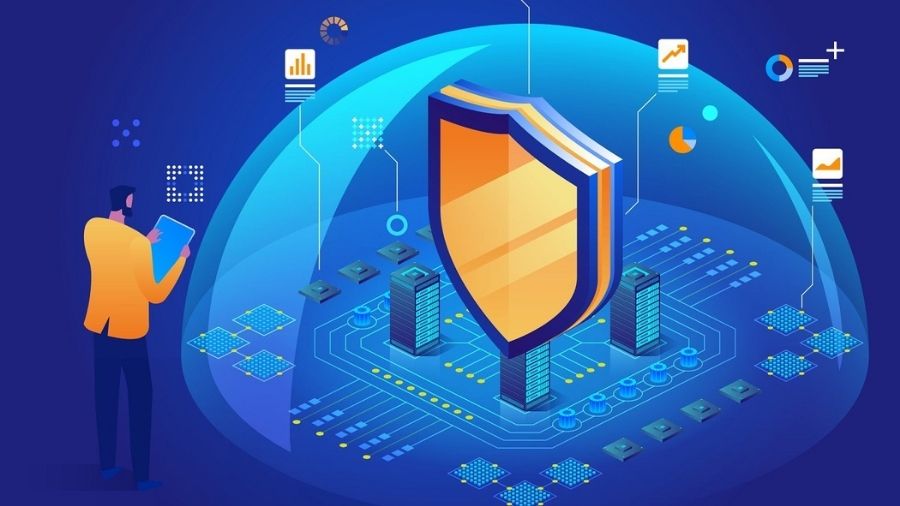
It takes a mix of people, procedures, and technology to create a successful SOC. The essential pillars are listed below –
1. Skilled Personnel
- Security Analysts (Tier 1, 2, and 3) – These are experts who keep an eye on alerts, look into questionable activity, and carry out incident response plans. Tier 2 conducts more thorough forensic analysis, Tier 3 manages advanced threat hunting and malware reverse engineering, and Tier 1 analysts prioritize incoming events.
- SOC Manager – Coordinates with executive leadership for strategic planning, supervises day-to-day operations and guarantees compliance with Service Level Agreements (SLAs).
- Team for Incident Response (IR) – The IR team, which consists of legal/compliance specialists, malware analysts, and digital forensics experts, leads containment, eradication, and recovery activities after an incident.
- Threat Intelligence Analysts – To proactively fortify defenses, continuously gather, examine, and incorporate external intelligence, such as Indicators of Compromise (IoCs).
2. Processes and Playbooks
- The documented processes for managing security events, from the first alert triage to the last remediation, are known as standard operating procedures, or SOPs. SOPs simplify incident response, guarantee consistency, and lessen decision fatigue.
- Incident Response Playbooks are pre-written, detailed instructions for handling typical attack scenarios, such as ransomware, phishing, and DDoS. Playbooks reduce errors and reaction times under pressure.
- Formal processes for assessing, approving, and putting into practice modifications to security tools, network architecture, and system configurations in order to prevent unforeseen vulnerabilities are known as change management and configuration control.
- Unambiguous rules regarding notification thresholds, internal escalation routes, and external communications (such as alerting customers, regulators, or law enforcement).
3. Technology Stack
- Security Information and Event Management (SIEM) – The core of centralized security monitoring—SIEM compiles telemetry and logs from endpoint detection and response (EDR), firewalls, intrusion detection/prevention systems (IDS/IPS), and other sources. Through correlation analysis, data normalization, and prioritized alert generation, the SIEM helps analysts spot patterns that point to malicious activity.
- Endpoint Detection and Response – In order to identify and isolate compromised machines before threats spread laterally, EDR uses behavioral analytics to provide real-time monitoring of endpoints (laptops, servers, and mobile devices).
- Network Traffic Analysis (NTA) – Tools that examine network flows, identify unusual traffic patterns (such as data exfiltration or C2 communications) and trigger alerts for in-depth packet inspection when required.
- Threat Intelligence Platform (TIP) – Combines IoC repositories, vulnerability bulletins, and threat feeds. The SOC can automatically add contextual information to alerts, including malware hashes, IP reputations, and TTPs (Tactics, Techniques, and Procedures), by integrating TIP with SIEM.
- SOAR – By automating repetitive tasks (like blocking malicious IPs and isolating infected hosts) according to predefined playbooks, SOAR frees up analysts’ time for higher-value tasks like threat hunting and root cause analysis.
- Vulnerability Management Tools – Prioritize remediation according to risk level, find missing patches, and continuously scan network assets. Vulnerability data informs proactive defense strategies when it is integrated with the SOC.
Emphasizing Centralized Security Monitoring

1. The Value of Centralization
An isolated threat response center has siloed visibility; while security tools can identify irregularities, crucial information may be lost in the absence of a centralized security monitoring system. This is why centralization is important –
- Unified View of Threat Landscape – Your SOC can obtain a thorough understanding of the whole attack surface by combining data from endpoints, network devices, cloud environments, and applications.
- Faster Detection and Correlation – A centralized SIEM correlates events in real time, eliminating the need to manually cross-reference disparate logs. This allows for the identification of multi-stage attacks that span multiple vectors (e.g., phishing email → C2 beaconing → data exfiltration).
- Easier Reporting – Data-driven decisions are made possible by executive dashboards and personalized reports that showcase important performance indicators like Mean Time to Detect (MTTD) and Mean Time to Respond (MTTR).
2. Integrating Cloud and On-Premises Environments
Hybrid infrastructures, which combine cloud services (IaaS, PaaS, and SaaS) with on-premises data centers, are frequently used by modern businesses. Logs from a reliable SOC are easily ingested by –
- Public Cloud Providers – Logs from public cloud providers, such as Google Cloud Platform (GCP), AWS CloudTrail, or Azure Monitor, guarantee that privileged administrator actions, API calls, and configuration modifications are monitored.
- Software-as-a-Service (SaaS) – A centralized monitoring platform that receives audit logs and user activity records from Office 365, Salesforce, and other SaaS applications.
A SOC provides threat detection by connecting these data streams, enabling a truly threat response center that operates across all environments.
SOC Services in Dubai and the UAE – Why Location Matters
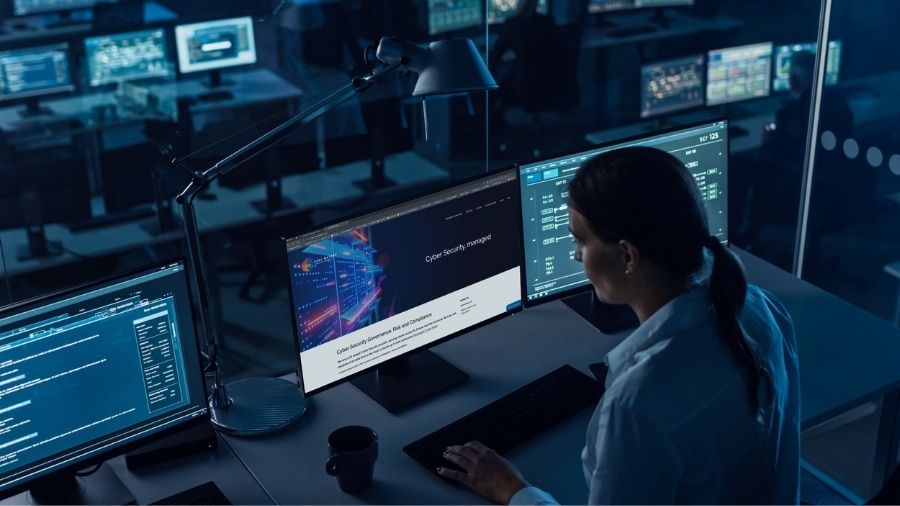
1. Localized Expertise
Choosing SOC services Dubai has several benefits.
Special cybersecurity regulations are enforced by UAE authorities like the Telecommunications and Digital Government Regulatory Authority (TDRA) and the Dubai Electronic Security Center (DESC). Due to their extensive knowledge of regional standards, such as Critical Information Infrastructure Protection (CIIP), local SOC providers are able to customize controls appropriately.
If necessary, being close to your physical offices speeds up on-site investigations, forensic evidence gathering, and physical security audits. By keeping your SOC in line with your business hours, operating within Gulf Standard Time (UTC+4) reduces communication lags and expedites decision-making.
2. Cultural and Language Proficiency
Technical skill is only one aspect of effective SOC operations; effective stakeholder communication is crucial. Clearer collaboration during high-stress incident responses is fostered by local SOC services Dubai providers who are aware of cultural quirks, preferred languages (English and Arabic), and business etiquette.
Building a Threat Response Center

1. Defining Incident Response Workflows
Your SOC’s threat response center needs to adhere to a set of organized stages –
- Creating incident response teams, outlining roles and duties, and keeping up-to-date contact lists for both internal and external stakeholders.
- To spot suspicious activity, make use of SIEM, EDR, and NTA tools. Analysts categorize incident severity (e.g., low, medium, high, and critical), validate alerts, and assess scope.
- To stop lateral movement, take immediate steps like rescinding compromised credentials, blocking malicious IPs, or isolating compromised systems.
- Eliminate malicious artifacts, such as rootkits and malware binaries, and fix vulnerabilities that have been exploited.
- Verify data integrity, restore systems from clean backups, and progressively reintroduce assets into production.
- To fill in any gaps found during the response, update playbooks, record lessons learned, and perform a Root Cause Analysis (RCA).
2. Continuous Threat Hunting
A proactive threat response center actively looks for hidden threats rather than waiting for alerts. Activities related to threat hunting include –
- Looking for anomalous data movements, irregular privilege escalations, or odd login patterns (such as logins from odd geolocations).
- Mapping open-source intelligence (OSINT) IoCs (such as command-and-control domains) and disseminating them among internal tools.
- To verify incident response readiness, find blind spots, and test defense resilience, attack scenarios are simulated.
- Your SOC maintains a continuous state of vigilance by integrating threat hunting into routine operations—truly exemplifying accuracy in cybersecurity.
Leveraging Managed Security Services
1. Benefits of Outsourcing SOC Functions
Building an internal SOC can be prohibitively expensive for many organizations, particularly small and mid-sized enterprises. Here’s where managed security services come in quite handy.
- Large upfront capital expenditures in infrastructure, hiring, and continuing training are no longer necessary thanks to outsourcing.
- Experienced analysts, threat hunters, and incident responders with years of domain knowledge are employed by Managed Detection and Response (MDR) providers.
- Managed security solutions can adjust to growing threat vectors, new cloud environments, and higher log volumes as your company expands.
- Prominent providers keep teams working around the clock to guarantee constant monitoring and quick incident response without taxing internal resources.
2. Selecting the Right Managed Services Provider
When weighing your options for Security Operations Center UAE, take into account –
- Establish precise measurements for system availability, reporting cadences, and response times (such as Mean Time to Detect and Mean Time to Respond).
- To reduce integration challenges, confirm that the SIEM, SOAR, EDR, and TIP platforms of the provider are compatible with your current security ecosystem.
- Make sure the provider can modify playbooks, reporting formats, and detection rules to fit your particular risk profile.
- To strengthen your security posture, seek out suppliers who provide concise monthly or quarterly reports, thorough incident summaries, and practical suggestions.
- Your cybersecurity strategy will fully take legal, regulatory, and cultural considerations into account if you have a local Threat Response Center and SOC operations in the United Arab Emirates.
Conclusion
One of the most strategic choices a company can make in the current digital environment is to invest in a strong Security Operations Center. You can build a strong defense against cyber adversaries by centralizing threat detection, expediting incident response, and utilizing managed security services. Partnering with Bluechip Gulf guarantees that your SOC embodies, complies with local regulatory frameworks, and provides unparalleled operational efficiency for GCC organizations looking for SOC services Dubai or Security Operations Center UAE.
The path to a mature SOC necessitates careful planning, knowledgeable staff, and unwavering dedication. This includes centralizing security monitoring, setting up a threat response center, continuously improving procedures, and utilizing cutting-edge technology. This guide offers the fundamental blueprint for success, regardless of whether you’re starting your first SOC or improving an already-existing operation. Keep in mind that the resilience and longevity of your entire organization are frequently determined by the strength of your SOC in an era characterized by swift cyber threats. Make informed decisions, make calculated investments, and allow Bluechip Gulf to lead you to a future of steady, safe growth.
Also Read: What Is Cybersecurity? The Different Types Of Cybersecurity