
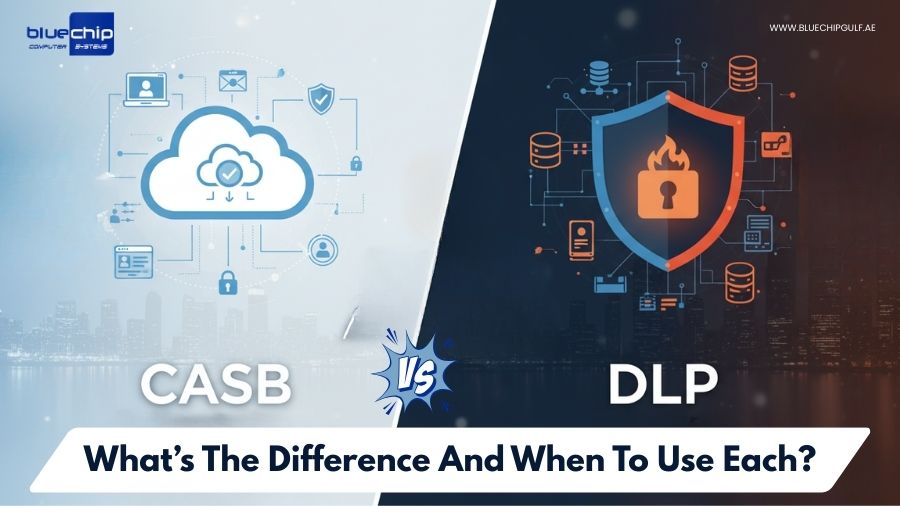
CASB vs DLP – What’s The Difference And When To Use Each?

Data is the lifeblood of the modern business world, and it increasingly resides in the cloud outside of traditional office walls. Businesses’ security requirements have grown significantly more complicated as they adopt programs like Dropbox, Salesforce, and Microsoft 365. Building a robust firewall is no longer sufficient; your data must be protected wherever it goes.
When discussing how to secure this dispersed digital environment, two terms are frequently used: Cloud Access Security Broker (CASB) and Data Loss Prevention (DLP).
Both are crucial tools for data security, but they serve different purposes, have different advantages, and concentrate on different areas of your network. Building a strong, contemporary security strategy requires an understanding of the differences between CASB and DLP, particularly for UAE companies that depend on cloud technologies.
Table of Contents
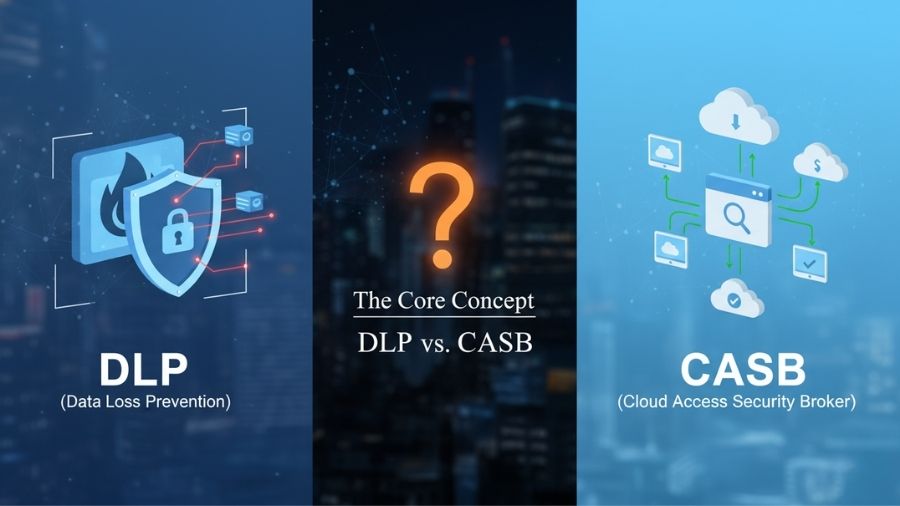
The Core Concept – DLP vs. CASB
In short –
- Data is central to DLP – “What is this data?” it queries. Is it delicate? Is it able to exit the building?
- The Cloud is the focus of CASB – “Who is using this cloud service?” it queries. Where is it coming from? What do they do with that data?
Let’s examine each one in more detail.
Data Loss Prevention (DLP) – The Data Detective
The fundamental method for safeguarding your private data, whether it’s on your company’s laptops (endpoints), internal servers (on-premises), or even in the cloud, is data loss prevention, or DLP.
DLP – What is it?
- DLP is a collection of policies and tools intended to: Identify and categorize sensitive information (such as trade secrets, credit card numbers, or copies of passports).
- Keep an eye on the usage and movement of that data.
- Prevent that data from being exposed or transmitted without authorization.
The DLP Focus – Location Agnostic Protection
The strength of DLP is its capacity to examine the data’s actual content. Rules such as these can be enforced by a complete DLP solution –
- Endpoint – Preventing a worker from transferring a file to a personal USB drive that contains fifteen or more credit card numbers.
- Network – Preventing a personal Gmail account from receiving an email containing a private financial report.
- Cloud (DLP component) – Automatically encrypting a file that is already stored in SharePoint due to the presence of regulated personal data.
DLP offers content-aware, granular protection for your whole IT ecosystem. DLP is a crucial first step for businesses looking for trustworthy data loss prevention services Dubai in order to comply with PDPL and protect intellectual property (IP).
When to Use DLP

When your main objective is to –
1. Prevent Insider Threats – Guard against employees accidentally or maliciously disclosing private information via USB drives, email, or printing.
2. Obtain Compliance – Comply with legal requirements (GDPR, PCI-DSS, HIPAA, or local UAE regulations) that call for stringent controls over particular kinds of data.
3. Protect IP – Protect intellectual property by making sure that your company’s strategic documents, designs, and proprietary algorithms never leave the company through unapproved channels.
Cloud Access Security Broker (CASB) – The Cloud Gatekeeper

A security vulnerability was brought about by the growth of cloud applications. The network perimeter was the main focus of traditional DLP, but once data is transferred to a platform like Office 365 or Slack, how can it be controlled?
The Cloud Access Security Broker (CASB) can help in this situation.
What is CASB?
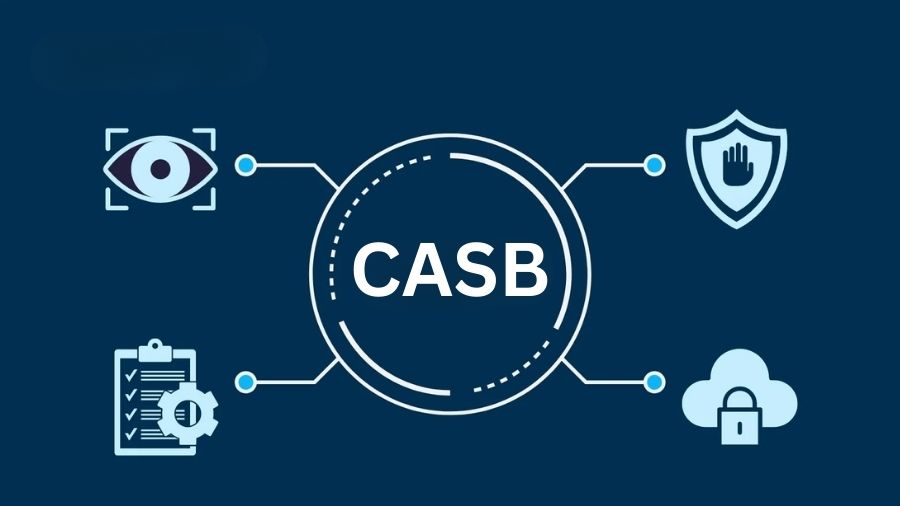
Between the user and the cloud service provider, a CASB serves as a control point. It offers four cloud security pillars –
1. Visibility – Recognizing and managing “Shadow IT”, unapproved cloud applications that staff members utilize without IT’s knowledge (e.g., using a personal file-sharing service).
2. Compliance – Making sure your data handling and cloud configuration follow the rules.
3. Data Security – Encryption, tokenization, and, most importantly, extending DLP policies to the cloud are examples of data security measures.
4. Threat Protection – Preventing malware and spotting odd user activity in the cloud application (like a user logging in from two different countries in an hour).
The CASB Focus – Cloud-Centric Control
Controlling access and offering governance, particularly for cloud services, are CASB’s strong points. It answers queries such as –
- “Is this user permitted to download data to their unmanaged personal laptop?”
- “In our cloud storage, are there any sensitive files kept in an externally shared folder?”
- “Is it appropriate for this user to upload a file to an unauthorized (Shadow IT) application?”
When to Use CASB
When your main objective is to –
1. Control Cloud Usage – Get complete visibility and control over all cloud services that your staff members use, both authorized and unauthorized.
2. Implement Access Regulations – Use conditional access rules, such as requiring Multi-Factor Authentication (MFA) or preventing access depending on the location of the user or the security status of the device.
3. Safe SaaS Data – Safeguard data while it’s being uploaded or downloaded, as well as while it’s at rest in cloud applications (such as scanning documents in Microsoft Teams or Salesforce).
The Combined Security Posture
Your business receives an integrated defense when DLP and CASB are combined –
- The intelligence is provided by the DLP engine, which designates a file as “Highly Confidential.”
- The “Highly Confidential” file cannot be downloaded onto a contractor’s laptop or shared externally from Google Drive thanks to the CASB tool, which expands the DLP’s policy to the cloud.
Your Trusted Partner in the UAE – Bluechip Computer Systems

It takes local knowledge to choose, integrate, and manage both CASB and DLP solutions while navigating the complexities of data security in a hybrid world.
Bluechip Computer Systems is a top supplier of strong cybersecurity solutions, including state-of-the-art CASB and DLP technologies. They provide customized data loss prevention services Dubai and all-encompassing cloud security strategies because they are aware of the unique regulatory environment and cloud adoption trends in the area.
By working with a specialist like Bluechip Computer Systems, companies in the UAE can make sure they –
- Use DLP to establish precise data policies for both on-premises and cloud data.
- Use DLP for endpoints and CASB for cloud access to enforce those policies everywhere.
- Maintain compliance with all applicable laws while providing excellent data loss prevention UAE.
Your data is your competitive advantage in the modern digital economy. Give it complete protection.
Also Read: Insider Threats – How DLP Protects Companies From Internal Risks