

Complete Guide To Structured Cabling Standards In The UAE For 2026

The foundation of any contemporary office or building is a well-installed structured cabling system. Following certain guidelines is essential for a dependable and effective network in the United Arab Emirates, where infrastructure and technology are developing quickly.
In order to make sure your data cabling Dubai project is fully compliant and future-proof, we will take you through the essential standards for structured cabling companies in the United Arab Emirates in 2026. We will also examine the importance of selecting a professional, such as Bluechip Computer LLC, for success.
Table of Contents
What is Structured Cabling?
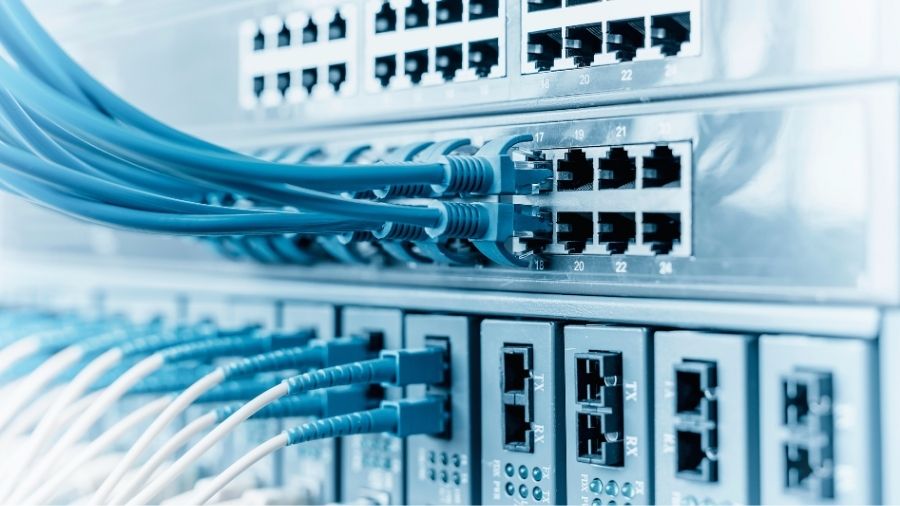
Consider structured cabling to be the IT infrastructure’s nervous system in a building. It offers a standardized and structured system in place of a disorganized, tangled web of cables for various devices. Your voice, data, video, and security requirements are all met by this one, cohesive infrastructure. As your company expands, a well-designed system makes it easier to add new devices, streamlines management, and enhances network performance.



The advantages of a standardized system are obvious –
1. Reliability – By lowering the possibility of cable failure and signal interference, it minimizes network outages.
2. Scalability – It can be readily extended to accommodate expanding workforces and new technologies.
3. Cost-effective – It lowers ongoing maintenance expenses and facilitates quicker and simpler problem-solving.
3. Future-Proofing – From simple internet to high-bandwidth requirements like cloud computing and 4K video conferencing, it supports a broad range of applications.
Key Structured Cabling Standards in the UAE (2026)

The installation of cabling in buildings is subject to strict regulations in the United Arab Emirates’ telecommunications industry. To guarantee compatibility, performance, and safety, a combination of national and international standards must be followed.
1. TIA/EIA and ISO/IEC Standards
Globally, structured cabling systems are governed by these fundamental international standards. These rules must be adhered to by all respectable structured cabling companies in UAE.
- TIA/EIA-568 – The most widely accepted standard for telecommunications cabling in commercial buildings is TIA/EIA-568. It outlines the kinds of cables (such as fiber optic or Category 6A), the maximum distances they can travel, and the appropriate methods for testing and termination. Higher-speed cables like Cat6A, which are necessary to support 10 Gigabit Ethernet (10GBASE-T) networks, are the main focus for 2026.
- ISO/IEC 11801 – The international counterpart of the TIA/EIA standard is ISO/IEC 11801. By offering a worldwide framework for structured cabling, it guarantees that systems set up in the United Arab Emirates are interoperable with those in other countries.
2. Local Regulatory Authorities and Standards
International standards are supplemented by local authorities’ unique requirements in the United Arab Emirates, particularly in Dubai.
1. Telecommunications and Digital Government Regulatory Authority (TDRA) – The federal agency in charge of overseeing the telecom industry is the TDRA. For the installation of telecommunications equipment, it issues rules and authorizes permits. The TDRA guarantees that all installations are carried out by qualified individuals and adhere to the nation’s more comprehensive telecom regulations, even though the international standards offer the technical guidelines.
2. Dubai Municipality (DM) – The Dubai Municipality has particular rules pertaining to electrical and low-voltage cabling systems for all new construction and building projects in Dubai. These regulations are in place to guarantee both public safety and that the infrastructure of a building operates as intended. DM approval is required for any data cabling project in Dubai.
3. Etisalat and du (Local Telecoms) – As the two primary licensed telecom companies, Etisalat and du (Local Telecoms) have specific internal specifications for how their services are integrated into a building’s internal network. Specifications for the main distribution frame (MDF) room, the kind of fiber optic cables used for the primary connection, and particular safety and earthing requirements are frequently included in this. To guarantee a smooth connection, a skilled contractor will collaborate closely with these suppliers.
3. Best Practices from Industry Bodies (BICSI)
In addition to the official standards, the top structured cabling companies in UAE follow a set of best practices provided by industry organizations such as BICSI (Building Industry Consulting Service International). For cabling professionals, BICSI provides training and certifications, which are a reliable way to gauge a company’s level of experience.
- BICSI Certified Professionals – Seek out experts with BICSI certifications, such as Technicians (Tech) or Registered Communications Distribution Designers (RCDD), when selecting a provider. These credentials attest to a professional’s expertise in properly designing and implementing intricate cabling systems.
The Importance of Choosing the Right Partner
For any business, navigating this maze of rules and regulations can be a challenging undertaking. It is crucial to collaborate with a reputable and experienced firm because of this. A business like Bluechip Computer LLC that is familiar with the local environment can make the difference between a project that is successful and one that is marred by expensive delays and technical problems.
One of the top structured cabling companies in UAE is Bluechip Computer LLC. They offer complete solutions that are customized to your company’s requirements and assured to satisfy all national and international standards; they do more than just install cables.
They add value in the following ways –
1. Knowledge of Regulations – They are completely up to date on all the most recent rules issued by the Dubai Municipality, the TDRA, and regional service providers such as Etisalat and du. From the first stages of design to the last inspection, this guarantees that your project is compliant.
2. Certified Professionals – Their staff of engineers and technicians is certified by BICSI and other pertinent industry organizations, ensuring the highest caliber of work.
3. High-quality Materials – To guarantee the durability and functionality of your network, they only utilize certified, premium materials from leading manufacturers.
4. Comprehensive Services – Bluechip Computer LLC provides a number of services in addition to installation, such as network design, cable testing and certification, and continuing maintenance. This implies that your network infrastructure has a partner for the duration of its lifecycle.
Cutting corners is not an option when working on a project that is so essential to your company’s operations, like data cabling Dubai. Over time, a properly installed system by professionals who follow all guidelines will save you money and hassles.
Conclusion
A dependable and high-performing network is essential in a place like Dubai, where companies are always searching for new ways to innovate and obtain a competitive advantage. The main takeaway from The Complete Guide to Structured Cabling Standards in the UAE for 2026 is that success depends on having a solid digital foundation.
Working with knowledgeable and certified experts like Bluechip Computer LLC gives you peace of mind that your network infrastructure is constructed to the highest standards and prepared to support your company both now and in the future.
Also Read: What Type Of Network Cabling Should Your Office Use In 2025