

Why SMEs In The UAE Need Data Loss Prevention Now More Than Ever

Small and medium-sized businesses (SMEs) in the UAE are growing at an unprecedented rate in today’s digitally driven economy, but they are also facing an unprecedented level of risk.
The amount and sensitivity of data handled by businesses have increased dramatically as they adopt cloud services, remote work, and mobile technologies. Data has evolved from financial transactions and customer records to proprietary product designs, making it a vital asset and a top target for cybercriminals.
A single data breach can be disastrous for SMEs, which have smaller budgets and fewer internal security resources than larger companies. For this reason, data loss prevention UAE tactics—in particular, are now necessary rather than optional.
Table of Contents
The Rising Cyber Threat Landscape For UAE SMEs
According to recent Mastercard research, 47% of SMEs in the UAE have already been the victim of a cyberattack; malware accounts for 32% of these attacks, while ransomware, phishing, hacking, and digital skimming each impact about 31% of victims. According to international studies, 60% of SMBs that are forced to deal with a breach cease operations within six months, and nearly 40% of SMBs report actual data loss as a result of cyberattacks. The sophistication of cybercrime in the area has increased, and threat actors are increasingly focusing on smaller businesses because they frequently don’t have strong security measures in place.
Furthermore, studies show that small businesses are the target of 43% of all cyberattacks, and attackers take advantage of the fact that many SMEs lack the necessary resources to quickly identify and contain incidents. The window for SMEs to react is closing as hackers breach up to 93% of networks worldwide and AI-powered tools make attacks more difficult to identify. The need for protection is more urgent than ever in Dubai and the UAE as a whole, where digital transformation projects are picking up speed.
Why Traditional Security Measures Fall Short
Firewalls, antivirus programs, and simple access controls are used by many SMEs. Although these are essential parts of a security program, their main goal is to stop outside intrusions. They don’t do much to prevent internal abuse, unintentional disclosures, or advanced exfiltration methods that steal data in obfuscated or encrypted formats. Certain channels—such as email, web uploads, USB transfers, or shadow-IT apps—may not be protected by the built-in security features of cloud platforms.
In the absence of a centralized framework for data loss prevention UAE, organizations find it difficult to –
- Find the locations of sensitive data on servers, endpoints, and cloud repositories.
- Sort data based on regulatory requirements and sensitivity levels.
- Track the motions and access patterns of important data in real time.
- Implement rules that automatically quarantine or block unauthorized transfers.
These gaps represent serious vulnerabilities because SMEs manage everything from sensitive financial projections to personally identifiable information (PII) about their customers.
Core Benefits of a Robust DLP Strategy
Putting in place a complete DLP Dubai solution offers several advantages that cater to the requirements and limitations of SMEs –
1. Active Risk Reduction
DLP tools can impose regulations that stop illegal copying, printing, emailing, or uploading of vital content by recognizing and categorizing sensitive files, such as payment card information, medical records, or proprietary designs. This lessens the possibility of inadvertent disclosure as well as malicious theft.
2. Observance of Regulations and Client Confidence
Strict controls over personal and financial data are required by UAE laws (like the PDPL) and international standards (like GDPR, PCI DSS, and HIPAA). The audit trails and reporting capabilities required to prove compliance are offered by a DLP framework. In addition to preventing penalties, compliance increases consumer trust in the security of their data.
3. Integrated Channel Visibility
Current DLP solutions provide real-time monitoring of cloud apps, web traffic, endpoints, and email. When every minute counts, SMEs benefit from having a single pane of glass to view data flows, identify anomalies, and react swiftly to possible leaks.
4. Saving Money and Maintaining Operations
The direct and indirect costs for SMEs—lost revenue, reputational harm, legal fees, and remediation efforts—are frequently insurmountable, even though the average cost of a data breach worldwide can surpass USD 4.8 million. By preventing breaches, downtime is decreased and continuous operations are guaranteed.
5. Protection Against Inside Threats
A large percentage of data leaks are caused by insider incidents, whether as a result of carelessness or malevolent intent. Activities like bulk file downloads, unauthorized USB use, or questionable printing jobs can be automatically flagged or blocked by DLP policies.
Key Features to Look for in a DLP Solution
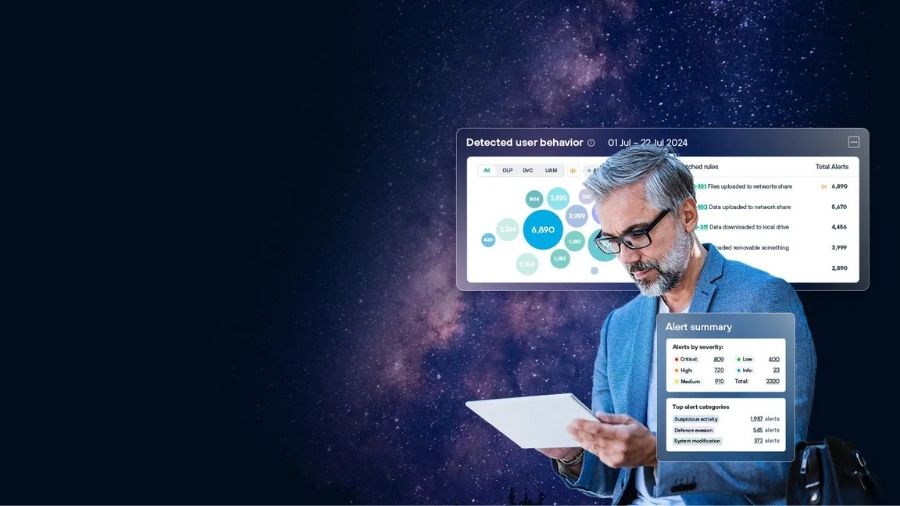
SMEs should take into account these crucial features when choosing data loss prevention UAE services –
1. Content Discovery and Classification – AI-driven classification to precisely tag sensitive data, along with automated scanning of on-premises and cloud repositories.
2. Content Discovery and Classification – Contextual policy enforcement strikes a balance between security and productivity by implementing dynamic policies that change according to user roles, device type, location, and time.
3. Tokenization and encryption – Tokenization options for database-level security and integration with encryption tools to safeguard data in transit and at rest.
4. Incident Control and Reporting – Centralized dashboards offering incident workflows, compliance reporting templates, and real-time alerts.
5. Scalability and Deployment Ease – Cloud-native or hybrid architectures that can easily integrate with current IT stacks and grow with the business.
Regional leaders in the field, ranging from international suppliers to regional experts, provide customized DLP Dubai packages with adaptable licensing structures, enabling resource-conscious SMEs to access enterprise-grade controls.
The Best Methods for Successful DLP Adoption

The following best practices should be adopted by SMEs in order to optimize ROI and guarantee successful implementation –
1. Do a Data Audit First – Know what information you have, where it is stored, and who can access it. A comprehensive audit guarantees that DLP rules concentrate on the most important assets and inform the development of policies.
2. Involve Stakeholders in All Functions – Security is not just an IT issue. To match DLP policies with company needs and legal requirements, you have to involve HR, legal, compliance, and business units.
3. Begin small and grow Slowly – Start with critical channels (like email) and high-risk data types (like customer payment information). Extend policies to include more data classes and endpoints as the company gets older.
4. Maintain a balance between security and usability – Controls that are too onerous may reduce productivity and lead users to look for ways around them. Use user-education initiatives and contextual policies to promote a culture of security-mindedness.
5. Always Keep an Eye on and Update – The landscape of cyber threats is constantly changing. Review DLP logs on a regular basis, update threat intelligence feeds, and adjust policies in response to incident trends.
Conclusion
The decision for SMEs in the United Arab Emirates is straightforward: adopt data loss prevention UAE right away or run the risk of experiencing an existential crisis as a result of a data breach. Even smaller businesses can attain enterprise-grade protection with DLP Dubai solutions that are customized to local laws and business needs.
SMEs can protect their brand, keep customers’ trust, and guarantee compliance by proactively identifying, categorizing, monitoring, and enforcing policies around sensitive information.
With solutions from Bluechip Computer Systems LLC, this approach allows teams to concentrate on innovation and expansion.Strong data protection isn’t merely a defensive tactic in an area dedicated to digital transformation; it’s a strategic enabler for success in the future.
Also Read: The Role Of Managed Security Service Providers (MSSPs) In Dubai’s Cybersecurity Ecosystem