
What Type Of Network Cabling Should Your Office Use In 2025

Selecting the appropriate network cabling for your office is more important than ever as technology advances, particularly in a bustling business center like Dubai. Any successful new office IT setup starts with a strong and dependable network. A wired network offers the stability, speed, and security that contemporary businesses require, even though wireless networks are more convenient.
Table of Contents
Understanding Your Cabling Options – Categories and Types
To help you understand performance levels, the network cabling industry is divided into different categories. The following are the most typical categories you’ll come across –
1. Cat5e (Category 5e) – The entry-level standard for contemporary networking is called Cat5e (Category 5e). Up to 1 gigabit per second (Gbps) of speed is supported. Although it might be adequate for routine activities like email and web browsing, as your company expands and your data requirements rise, it could become a bottleneck.
2. Cat6 (Category 6) – Cat6 provides better performance than Cat5e. Only over shorter distances (up to 55 meters) can it support speeds of up to 10 Gbps. This makes it an excellent option for short-distance runs or connecting devices in a single room.
3. Cat6a (Category 6 Augmented) – For many businesses, Cat6a (Category 6 Augmented) is the sweet spot. 10 Gbps speeds are supported by Cat6a over a 100-meter range. It is a great option for a busy office setting with numerous cables running close together because it is made to handle higher frequencies and offers superior protection against “crosstalk”—interference from neighboring cables.
4. Cat7 and Cat8 – The most sophisticated copper cables are Cat7 and Cat8. Like Cat6a, but with more shielding, Cat7 can support 10 Gbps over 100 meters. With a maximum speed of 40 Gbps over short distances (up to 30 meters), Cat8 is intended for data centers and other high-demand applications. These are much more costly and frequently regarded as overkill for a normal office.
Shielding and Fire Ratings – The Details That Matter
You must take into account the cable’s construction in addition to its category.
1. UTP (Unshielded Twisted Pair) – Unshielded Twisted Pair, or UTP, is the most widely used and least costly kind of cable. It works well in most office settings with low levels of electromagnetic interference (EMI) from electrical panels or large machinery.
2. STP (Shielded Twisted Pair) – STP (Shielded Twisted Pair) cables are shielded from electromagnetic interference by a foil or braid. Compared to UTP cables, they are more costly, more rigid, and more challenging to install. They work best in server rooms or industrial environments where many cables are bundled together.
The cable’s fire rating is another crucial consideration. In order to circulate air, cables are frequently run through “plenum” spaces—the spaces beneath floors and through ceilings.
1. Cables that are plenum-rated (CMP) – These have a unique jacket that reduces the amount of smoke and harmful gases released during a fire. Plenum-rated cables must be used in these air-handling areas according to building codes in many places, including the United Arab Emirates.
2. Riser-rated (CMR) cables – For vertical runs between floors in a building, where the risk of a fire is lower, riser-rated (CMR) cables are a less costly option.
Why a Structured Cabling System is a Must-Have
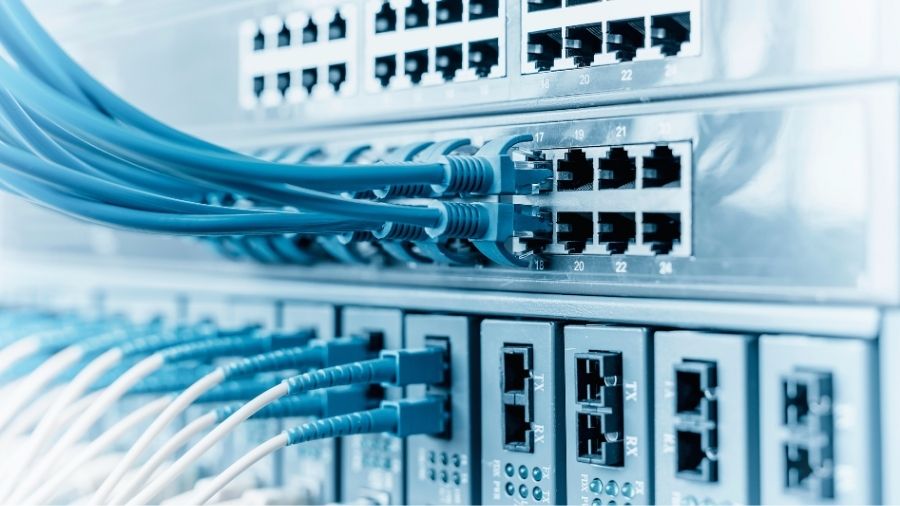
It is not enough to simply run cables from one location to another for a new office IT setup in Dubai. Installing structured cabling in Dubai system is the best course of action. This calls for a structured, standardized approach to your cabling system.
A structured cabling system that is well-designed –
1. Is Future-Proof – It can readily accommodate faster speeds and new technologies. A structured system makes the process of upgrading from a Cat6 network to a Cat6a much easier.
2. Is Scalable – The system can be extended without a total redesign as your company expands and you add more workers and devices.
3. Minimizes Downtime – It greatly simplifies maintenance and troubleshooting. A technician can swiftly locate and resolve problems with a system that is well-labeled and structured.
4. Improves Safety and Aesthetics – No more tangled cables! In addition to looking professional, a neat, well-organized cabling system improves airflow around equipment and lowers trip hazards.
5. Is Cost-Effective – Structured cabling lowers maintenance costs, avoids network problems, and lowers the cost of future upgrades, even though the initial investment may seem higher.
The Role of Fiber Optic Cabling
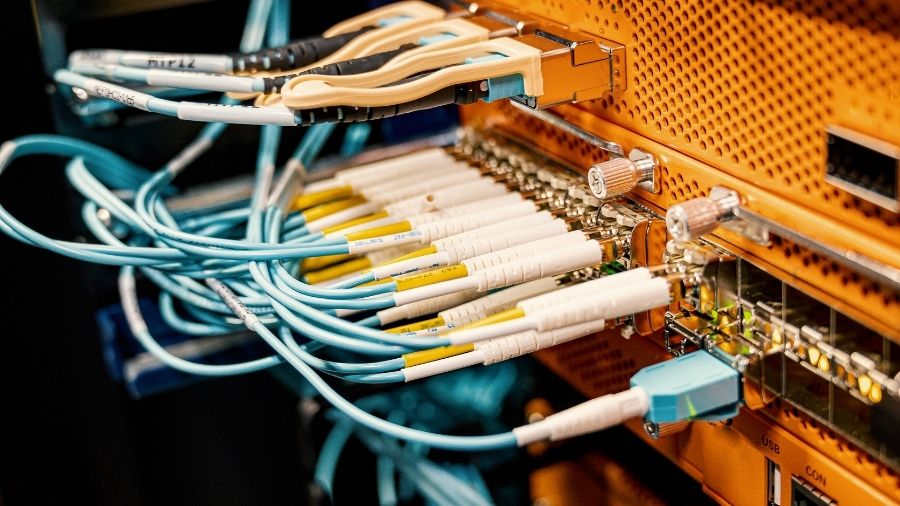
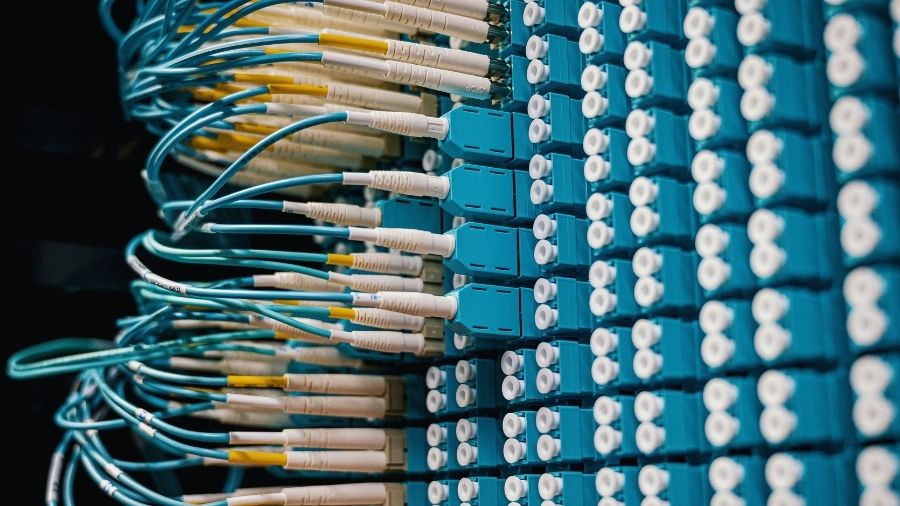
Fiber optic cabling is essential to modern networks, particularly for the “backbone,” even though copper cables like Cat6a are ideal for connecting workstations. This serves as the primary connection between the main server room and the rest of the network, or between floors or buildings.
Instead of using electrical signals to transmit data, fiber optic cables use light pulses. This offers them a number of significant benefits –
1. Massive Bandwidth – They have the capacity to transmit vast volumes of data over incredibly long distances without experiencing any signal loss.
2. Immunity to EMI – They are perfect for high-interference environments because they rely on light and are therefore immune to electromagnetic interference.
3. Security – An additional degree of protection is offered by the difficulty of “taping” into a fiber optic cable undetected.
A hybrid approach is frequently the best option for your data cabling Dubai project. When connecting individual computers and devices to the network, use Cat6a cables for the horizontal runs and fiber optic cables for the main network backbone.
Choosing the Right Partner in Dubai

Selecting the best partner for your structured cabling project is the most crucial choice you will make when starting a new office IT setup in Dubai. A trustworthy and knowledgeable business like Bluechip Computer LLC can make all the difference. To make sure your network is prepared for both today’s demands and tomorrow’s innovations, they have the know-how to evaluate your unique needs, design a system that will last, and install it precisely.
From a thorough site survey to cable installation, termination, and thorough testing to guarantee every connection is operating at peak efficiency, a qualified team will take care of everything. Additionally, they will offer documentation and continuing assistance, freeing you up to concentrate on what you do best—managing your company.
Structured cabling in Dubai is a need, not a luxury, for your office in 2025. You can create a network that is quick, dependable, secure, and prepared to expand with your company by selecting the appropriate combination of Cat6a and fiber optic cables and working with a professional like Bluechip Computer LLC.
Also Read: Why Bluechip Is Best Option For CCTV Solutions In Dubai